Cocobi Dentist - Kids Hospital
- 3.8
- Rating
- 10.00M
- Installs
- Free
- Price
 Analysis by App-foxy
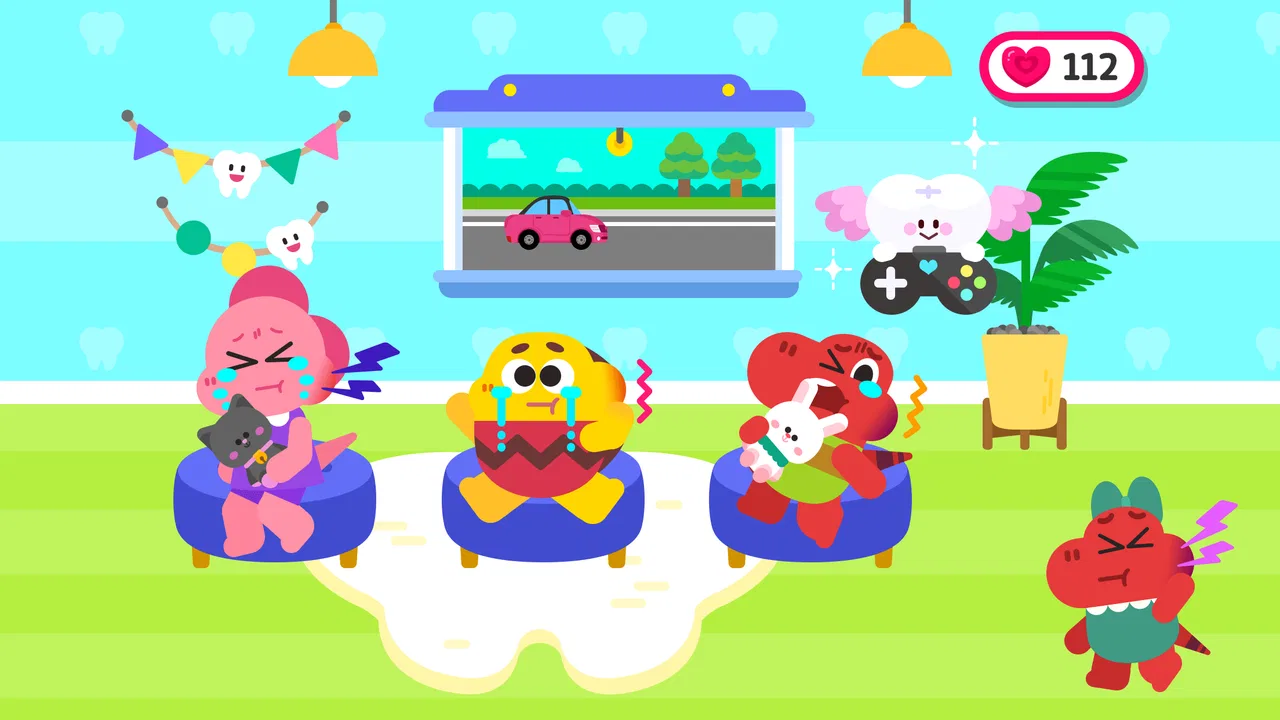
I found Cocobi Dentist - Kids Hospital easy to understand from the first tap: it puts children in a friendly dentist setting where the Cocobi characters need help. The idea is simple, visual, and immediately suitable for younger players who may be curious about a dental visit or nervous about one. I would describe it as a gentle educational game rather than a serious learning tool, with play built around familiar care routines and cheerful interaction.
That simplicity is its biggest strength. A child does not need to read long instructions or understand a complicated rule system before starting. The game’s appeal comes from seeing a character with a dental problem, choosing an appropriate action, and watching the situation improve. In my experience, this kind of clear cause-and-effect play works especially well for short sessions, supervised play, or a quiet activity before bedtime.
How the dental play builds goals and momentum
I find the appeal of Cocobi’s dental play clearest when a child can see a small task through to a satisfying result. In this section, I look at how those manageable goals help sustain attention without turning a gentle care routine into a test. That distinction matters in a shared household: the next question is how to make the game easy to hand between children without expecting it to manage turns for you.
You May Also Like

 AccuWeather: Weather Radar
AccuWeather Review: A Quick, Clear Forecast for Everyday Decisions
For everyday plans, the best forecast is the one you can understand quickly. AccuWeather makes rain timing, radar, and local conditions easy to act on, with a few trade-offs.

 Hill Climb Racing
Why Hill Climb Racing Still Turns Crashes Into One More Run
A tiny car, a bumpy hill and one more upgrade: Hill Climb Racing keeps resurfacing because its simple chaos makes every near-miss feel personal.

 AliExpress - Shopping App
AliExpress Makes Global Shopping Feel Personal, but Shoppers Bear the Risk
AliExpress turns a global marketplace into a pocket-sized discovery engine. Its reach is useful, its shopping loop compelling, and its trade-offs easy to miss.

 Lords Mobile: Kingdom Wars
Lords Mobile Is a Kingdom-Building Routine, Not a Quick Match
A case-by-case verdict on the building, battles, device demands, and social commitments that make Lords Mobile rewarding for some players and exhausting for others.

 PDF Scanner app - TapScanner
TapScanner Makes Paperwork Easier to Capture, Check, and Share
TapScanner makes scanning with a phone feel less like a rescue operation and more like a dependable step in getting work done. Its capture tools are useful, though not flawless.

 Block Blast!
 Shows How Much a Puzzle Game Can Leave Out
A quiet grid game shows why puzzle players increasingly value instant clarity, repeatable skill and low-pressure play—and where the genre still needs to catch up.
More From Our News Desk
View All News


Getting started with clear early goals
The first goals are easy to grasp: look after a Cocobi friend, respond to the dental situation, and complete the care sequence. That gives children a purpose without making the opening feel like a test. Instead of asking them to memorize facts about teeth, the game lets them learn through actions. The child can focus on what is happening on screen and decide what seems helpful next.
I like this approach because it turns an unfamiliar setting into something approachable. A dentist’s office can seem intimidating to a young child, but playful characters and direct interaction soften that feeling. The game can therefore work as a conversation starter for parents. After a session, it is natural to ask what happened to the character, why dental care mattered, or what the child remembers from their own brushing routine.
The early objective also avoids the common problem of educational games that begin with too much explanation. Children who are still developing reading skills can follow the visual prompts more comfortably than text-heavy instructions. That makes the game a better fit for preschool and early elementary players than for older children looking for deeper strategy or detailed medical information.
Progress signals that children can actually notice
For a young audience, progress has to be visible. In this game, the most useful progress signal is the changing condition of the character and the sense that each completed action moves the visit forward. A child does not need a complicated profile screen to understand success. Seeing the patient become happier or healthier is often enough to make the next step feel worthwhile.
This is also where the educational value sits. The game connects an action with a result, so children can begin to associate care with improvement. That is more memorable than simply being told that dentists help people. I would not use it as a replacement for a real explanation from a parent or dentist, but it can make that explanation less abstract.
Parents should keep expectations realistic. The progress is designed for play, not for tracking real dental health. A child may understand the order and purpose of a playful treatment without learning precise dental terminology. That is not a flaw for this age group, but it does mean families wanting detailed oral-health lessons will need another resource alongside it.
Why the difficulty curve stays gentle
The challenge feels intentionally forgiving. The game is aimed at Everyone, and its actions are presented in a way that encourages experimentation rather than punishing mistakes. That makes it accessible to children who are still learning how to use touch controls. A player can concentrate on recognizing the next task instead of worrying about losing progress because of a small error.
That gentle curve is useful during a first visit to the game. Children can build confidence with the controls and understand the basic rhythm before deciding whether they want to continue. It also makes the title suitable for a child who is tired, distracted, or sharing a device with a sibling. The experience does not demand the same concentration as a puzzle game with strict timing.
The trade-off is that children who enjoy demanding challenges may outgrow it quickly. There is not the same sense of mastery that comes from increasingly complex levels, difficult combinations, or strategic planning. I would choose it for comfort, role-play, and guided learning, not for a child who wants a game to test reflexes or problem-solving at a high level.
Where the pacing works best
The pacing suits short bursts. A child can play while waiting for an appointment, during a calm afternoon, or as part of a parent-led conversation about brushing and visiting the dentist. The focused theme keeps the session from becoming overwhelming, while the straightforward actions make it easy to stop without having to remember a complicated story.
There is a practical advantage here: the game can serve as a small transition activity. For example, a parent might let a child play before an actual dental appointment and then use the characters as a bridge into talking about what will happen. I would avoid presenting the game as a promise that a real appointment will feel exactly the same, but it can help make the setting familiar.
The same short-session design may feel limited if a child expects a large hospital simulation. The title centers on the dentist theme, so it should not be approached as a broad medical management game. Its focused scope is helpful for clarity, but it also narrows the reasons to return once the child has seen the main interactions.
Unlocks, repetition, and the pressure to return
One important question for a children’s game is whether it keeps attention through healthy curiosity or through pressure. Here, the appeal is primarily the characters, the care routine, and the satisfaction of finishing a dental visit. That is a better foundation than forcing a child to chase complicated rewards. I prefer games that let children stop naturally, and this one fits that calmer model.
At the same time, its retention may depend heavily on whether a child enjoys repeating the same kind of care play. Children who love role-play can return because they like helping the Cocobi friends again. Others may feel that the novelty fades once they understand the sequence. Parents should therefore see it as a focused activity rather than an endlessly expanding game.
In-app purchases are listed at $1.99 per item, so I would check the purchase flow before handing the device to a child. The game itself is free, which makes trying it low-risk, but a free download with optional purchases still deserves ordinary parental attention. I would use device-level purchase controls and explain to the child that tapping a button does not automatically mean something should be bought.
What makes the educational angle useful
The strongest lesson is emotional and practical rather than academic. The child sees a character needing help and participates in making that character feel better. That can encourage empathy and reduce anxiety around care. The dentist setting also creates a natural opportunity to discuss brushing, clean teeth, and asking a trusted adult for help when something hurts.
I would not claim that playing alone teaches proper brushing technique in a complete way. A game can reinforce a habit, but it cannot check whether a child is brushing for long enough or reaching every area. The best use is to play together occasionally, ask the child to explain the actions, and connect the fictional visit with real routines at home.
Another useful detail is the game’s visual accessibility. Children who struggle with lengthy reading can still engage with the situation through characters and actions. That does not make every screen equally easy for every child, but it lowers the language burden compared with an educational app built around written quizzes. Parents can provide the spoken explanation when a child is unsure what to do.
Who should try it, and who should skip it
I would recommend it to families looking for a free, gentle educational game for children with a clear dentist theme. It is especially suitable for a child who enjoys pretend play, likes helping cartoon characters, or needs a friendly introduction to the idea of dental care. The Everyone rating supports its broad family positioning, while the simple structure makes it approachable for younger players.
I would skip it if the goal is advanced dental education, a realistic medical simulator, or a game with a deep long-term progression system. Older children may find the actions too predictable, and players who need strong challenge may prefer a puzzle or strategy title. It is also not the right choice as the only preparation for a dental appointment; a real explanation from a parent or professional remains more accurate.
The developer, KIGLE, has positioned the game around the Cocobi characters rather than around technical medical detail. That choice matters. The characters are the reason a child may want to engage, while the dental setting gives the play a useful theme. If a child does not connect with cartoon role-play, the educational purpose alone may not be enough to maintain interest.
Everyday ways to get more from a short session
One effective routine is to let the child play once, then ask them to retell the visit in their own words. This turns passive tapping into a small speaking exercise and shows whether they understood the sequence. I would avoid correcting every detail immediately; it is more useful to ask open questions such as what the character needed and how the child knew which action to choose.
A second approach is to connect one game action with one real habit. If the session leads to a conversation about brushing, move away from the screen and let the child demonstrate their routine with a real toothbrush. The game becomes a prompt rather than a substitute. This is a more meaningful use than leaving it running as background entertainment.
For siblings, I would take turns rather than letting one child control everything. The game’s straightforward pace makes it suitable for shared discussion, but a younger child may need time to explore without a faster sibling taking over. Taking turns also reveals whether each player understands the goal independently.
Parents should also watch for frustration caused by touch accuracy. If a child repeatedly taps the wrong area, guide them verbally before taking the device. The learning opportunity is in choosing and completing the action, so doing everything for them removes much of the benefit. Shorter sessions are preferable if attention starts to drop.
Technical fit and value
The game is free to download and requires Android 7.0 or later, which makes it accessible on many still-used Android devices. Its current version is 1.0.25. I would still check the device before installing, especially on an older family phone or tablet, and make sure the child has a comfortable screen size for tapping the dental tools and characters.
Its reach is considerable, with over five million installs, and the average rating sits at 4.0 from around four thousand ratings. Those figures suggest that the concept has found a substantial audience, but they do not remove the need to judge it against a particular child’s interests. A popular children’s game can still be the wrong match for a player who wants competition, exploration, or more varied subjects.
There are also around thirty-eight written reviews, which is a smaller pool than the overall rating count. I would treat the numerical score as a quick impression rather than a complete description of the experience. In practical terms, the important questions are whether the child enjoys the Cocobi presentation, whether the dental theme is useful at home, and whether the available play remains engaging after the first session.
My progression verdict
As a progression-focused game, this is deliberately modest. The early goals are clear, the progress is communicated through the patient’s care, and the difficulty avoids intimidating young players. The pacing supports short, repeatable sessions, but the same simplicity limits long-term challenge. Its retention comes from friendly characters and role-play more than from complex unlocks or demanding mastery.
That balance feels appropriate for the intended audience. I would rather see a young child calmly understand a care routine than feel pressured by timers, rankings, or an overloaded reward track. Still, parents should not expect a large progression ladder or a game that grows substantially with the player. The value is concentrated in the theme and the conversation it can encourage.
Overall, I see it as a useful little companion for introducing dental ideas through play. It is best when an adult occasionally joins in, links the fictional treatment to real habits, and keeps expectations age-appropriate. If you want a friendly, free dentist game for a young child, I think it is worth trying. If you want depth, realism, or a challenging campaign, I would look elsewhere.
My recommendation: use it as a short, reassuring activity and a starting point for talking about dental care, not as a complete lesson or an endlessly replayable adventure. That is where this KIGLE game feels most successful, and where its simple goals and gentle pacing make the most sense.
FAQs for Cocobi Dentist - Kids Hospital
01What is Cocobi Dentist - Kids Hospital?
Cocobi Dentist - Kids Hospital is an engaging educational app designed for children. It allows them to explore the role of a dentist in a fun and interactive way. Kids can learn about dental hygiene, treat virtual patients, and understand the importance of oral health through playful activities.
02Is Cocobi Dentist - Kids Hospital safe for children?
Yes, Cocobi Dentist - Kids Hospital is designed with child safety in mind. It features age-appropriate content and user-friendly controls to ensure a safe and enjoyable experience for young users. Parents can rest assured that the app is free from inappropriate content and includes parental controls.
03What age group is Cocobi Dentist - Kids Hospital suitable for?
Cocobi Dentist - Kids Hospital is ideally suited for children aged 3 to 8 years. The app’s interactive features and colorful graphics are tailored to engage young minds and help them learn about dental care in a fun, accessible way. It’s a great tool for early childhood education.
04Are there any in-app purchases in Cocobi Dentist - Kids Hospital?
Cocobi Dentist - Kids Hospital offers in-app purchases to enhance the gaming experience. While the basic version is free, additional features and activities can be unlocked through purchases. Parents should monitor these options and make use of any available parental controls to prevent unauthorized transactions.
05Can Cocobi Dentist - Kids Hospital be used offline?
Yes, Cocobi Dentist - Kids Hospital can be used offline after it has been downloaded and installed. This feature makes it a convenient option for parents looking to entertain their children during travel or in areas with limited internet connectivity.
Pros
- Engaging and colorful graphics for kids.
- Simple controls ideal for young users.
- Educational content about dental care.
- Variety of fun mini-games included.
- Encourages creativity and imagination.
Cons
- Limited replay value for older children.
- In-app purchases can be intrusive.
- Some mini-games feel repetitive.
- Requires internet for full features.
- Ads might disrupt the gaming experience.

Cocobi Dentist - Kids Hospital
Gallery